


NWT Energy System
Where our energy comes from and how we use it
Every day in the Northwest Territories, we use energy to heat buildings, keep the lights on, run equipment, and move people and goods. Because our territory is large and communities are far apart, our energy system looks very different from southern Canada.
Here’s a simple overview of how it works.
Energy, Electricity, and Power – What’s the Difference?
ENERGY
Energy is the total amount of work that can be done. It’s what heats homes, fuels vehicles, and runs equipment. You can store energy (in fuel tanks or batteries) or produce it (from hydro, solar, wind, or diesel generators).
Examples:
- A tank of heating oil contains energy.
- A battery contains energy.
- A hydro dam produces energy from moving water.
Measured in: kilowatt-hours (kWh) or joules (J).
ELECTRICITY
Electricity is one type of energy: the kind that moves through wires. It’s generated in power plants or solar panels and delivered instantly to homes and buildings.
Example:
Turning on a light uses electricity that was generated somewhere else.
Measured in: kilowatt-hours (kWh).
POWER
Power is the speed at which electricity is being used or produced at any moment.
Example:
A 1,500-watt (1.5kW) space heater uses electricity at a rate of 1.5 kilowatts (kW).
If you run it for one hour, it uses 1.5 kilowatt-hours (kWh) of energy.
Measured in: kilowatts (kW).
A Simple Analogy
Think of your garden hose:
- Energy = how much water is in the tank
- Electricity = the water flowing through the hose
- Power = how fast the water is coming out
This matters because the NWT must plan for all three:
How much energy we need, how electricity moves through the grid, and how much power (capacity) communities need at once.
How the NWT Uses Energy
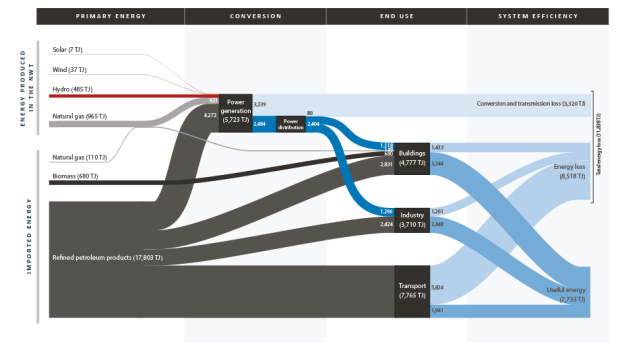
In 2023, the NWT used a total of 20,088 terajoules of energy — roughly equal to 500 million litres of diesel.
Because many communities are remote, 97% of all energy used in the territory still comes from fossil fuels (diesel, gasoline, aviation fuel, propane).
A diagram like the one below shows how energy flows through the system, from fuel sources to electricity production, heating, transportation, and losses along the way.
1. Most of the NWT’s energy is imported
Local energy (hydro, solar, wind, biomass, natural gas) is only a small share of what we use. Most energy, especially for vehicles and heating, comes from imported petroleum products.
2. Transportation is the biggest user of energy
Cars, trucks, aircraft, and heavy equipment use more energy than any other sector. These fuels are expensive to ship north, which adds cost to everything else.
3. Buildings use energy for heat and electricity
Homes and commercial buildings mostly use:
- heating oil
- propane
- biomass (in some communities)
- electricity (where hydro is available)
Heating makes up a large part of northern energy costs because of our long, cold winters.
4. Industry also relies heavily on diesel and gasoline
Mines, exploration projects, and industrial operations have limited access to renewable energy and often operate off-grid. This means they rely on fossil fuels, which can be moved and stored to meet energy needs.
5. Energy losses are high – especially with fossil fuels
The right-hand side of the diagram shows something important:
- Diesel generators lose a significant amount of energy as heat.
- Vehicles waste energy through heat and friction (gasoline engines are only ~25% efficient).
- Transmission and distribution of electricity also have losses, especially in remote areas over long distances.
These losses mean people pay more for the same amount of useful energy, and why shifting to more efficient technologies saves money over time.
Why This Matters for the NWT
Understanding how our energy system works helps explain:
- Why electricity and heating cost more in remote communities: Fuel must be shipped long distances and systems are small, with extra redundancy, making costs higher per customer.
- Why renewable energy integration helps but can’t replace diesel overnight: Hydro, solar, and wind can reduce fuel use, but every community has different technical limits and resource availaibilty.
- Why planning for the future is essential: The NWT needs to balance reliability, affordability, and reducing dependence on fossil fuels.